
CERTIFIED ELECTRICAL SAFETY WORKER (CESW)
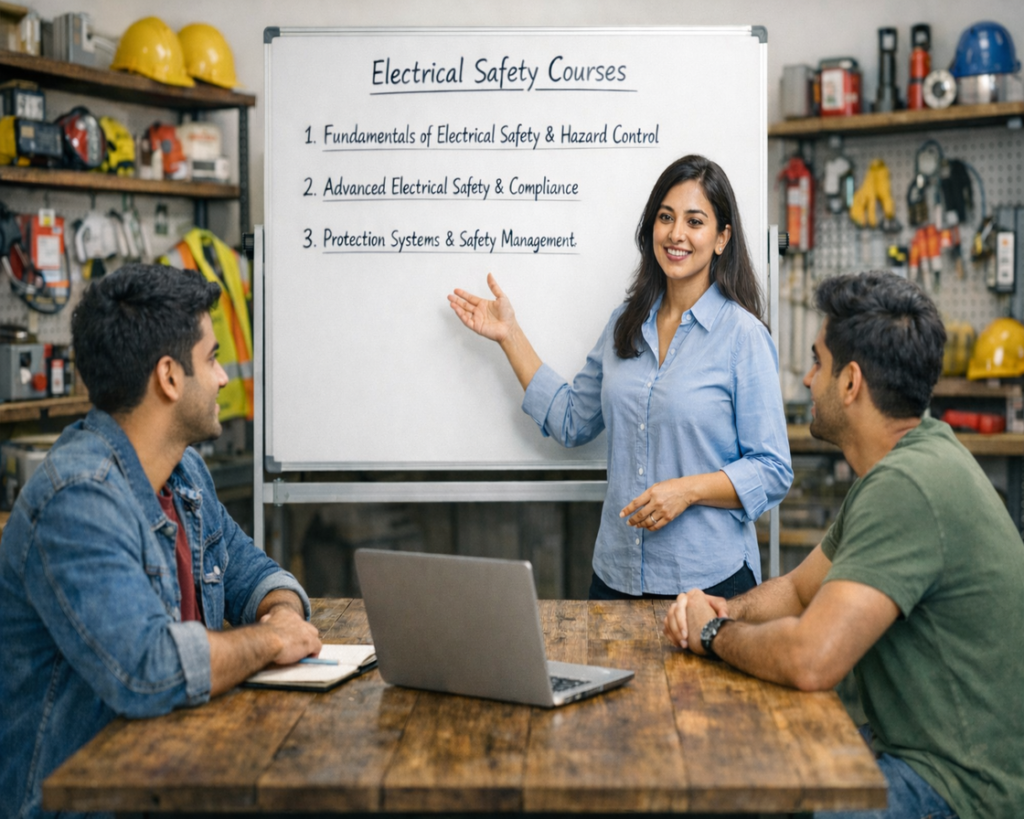
CERTIFIED ELECTRICAL SAFETY WORKER (CESW) – Professional Certification
Duration: 1–2 Weeks (Intensive) / Flexible Schedule
- Fundamentals of electricity & electrical systems
- Basics of Electrical Safety
- Fundamentals of electricity & electrical systems
- Electrical hazards in industrial environments
- Safe approach distances
- Basic electrical protection principles
- Roles and responsibilities of employees & employers
- Causes and effects of electric shock
- Human body response to electrical current
- Safe isolation procedures
- Lock-Out / Tag-Out (LOTO) principles
- Use of insulating materials and barriers
- Causes of electrical fires
- Overloading and short circuits
- Insulation failure and overheating
- Fire detection systems
- Electrical fire prevention and emergency response
Importance of earthing for electrical safety
Types of earthing systems in industries
Bonding practices and requirements
Testing and maintenance of earthing systems
- Arc flash and arc blast concepts
- Causes and risk factors
- Arc flash analysis
- Arc flash warning labels
- Engineering and administrative control measures
Selection of electrical PPE
Arc-rated clothing and equipment
Insulated tools and voltage-rated gloves
PPE inspection and maintenance
Limitations and safe usage
Classification of hazardous areas
Electrical equipment protection methods
Safe installation practices
Maintenance in explosive and flammable environments
Effects of lightning on electrical systems
Surge Protection Devices (SPD)
Grounding requirements
Best practices for industrial facilities
Overview of Indian electrical safety standards
Applicable acts, rules, and guidelines
Employer legal responsibilities
Electrical inspections and documentation
Audit and compliance requirements
Electrical safety management systems
Hazard identification and risk assessment
Safety training and toolbox talks
Incident investigation
Continuous improvement of safety practices
Syllabus

Job Opportunity
Faq
The course covers two PLC brands (choose from Schneider, Siemens, Allen-Bradley, or Delta), plus one SCADA system, one HMI, and two VFDs.
The course is 1–2 Weeks, depending on the fixed schedule.
Yes, the training follows NFPA 70E and OSHA-aligned electrical safety practices.
The course provides practical learning through real-world examples and hazard analysis and safety implementation methods.
Yes, the course covers learning about hazards associated with arc flashes, and how the same can be mitigated by selecting and then wearing proper PPE.
Yes, Indian regulations, inspections, and compliance requirements are included.
Yes, the course is designed to support professionals managing live electrical systems.
Yes, participants receive CESW certification after meeting eligibility and passing the exam.
Yes, the course is heavy on injury prevention, risk management, and safety program execution.
Yes, maintaining CESW certification requires ongoing professional development.
Our Brands